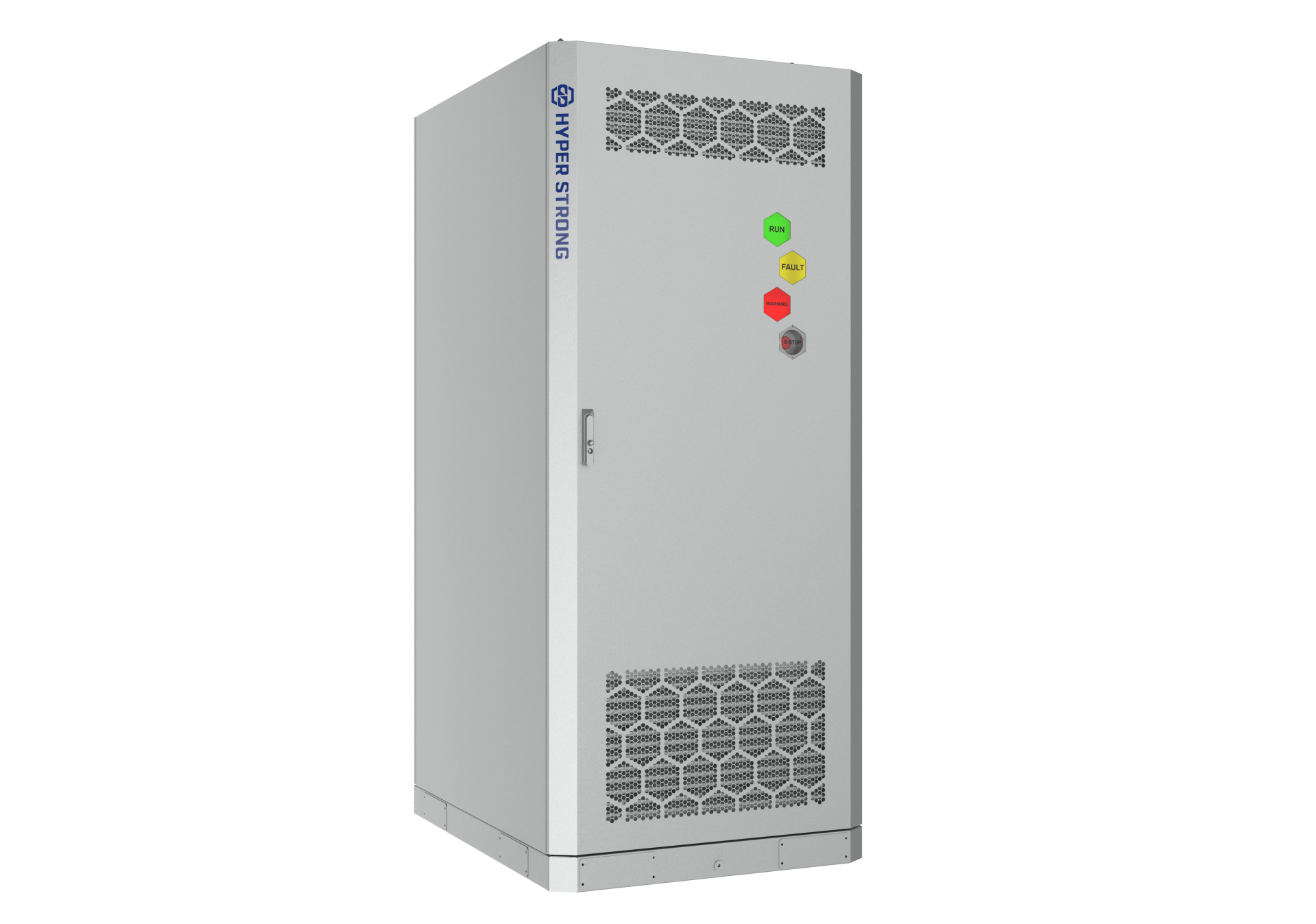
Modern industrial landscapes demand equipment that balances raw functional capacity with stringent thermal and structural requirements. As urban environments expand, energy infrastructure often sits closer to human-centric spaces, including commercial centers and high-density zones. The visual profile of critical power hardware now requires thoughtful design to ensure it complements surrounding structures rather than disrupting site utility. Integrating a high-performance hypercubeC&I energy cabinet provides a solution that merges industrial durability with the architectural standards required for professional, modern, and high-visibility property developments.
The Thermal Paradox: Airflow vs. Architectural Stealth
Engineers face a rigid design conflict: battery cell longevity depends on active convective heat dissipation, yet architectural guidelines mandate clean, monolithic surfaces. Relying on large, external louvered vents breaks the visual plane of a facade. Achieving a seamless look requires transitioning from forced-air cooling to internal liquid-cooled plates integrated into the battery rack chassis. This internalizes heat exchange, allowing the shell to remain a solid, unperforated surface that satisfies strict site visual codes.
However, this creates a critical boundary condition. Under peak load or ambient temperatures exceeding 45°C, the system faces potential thermal throttling if the liquid-to-air heat rejection unit is undersized. To maintain the monolithic aesthetic without risking internal cell degradation, the cabinet utilizes high-surface-area micro-channel cold plates. These plates maximize heat transfer efficiency, ensuring that even under continuous high-C-rate discharge, internal temperatures remain within the strict 15°C–35°C window, effectively mitigating the risk of design failure in constrained environments.
Systemic Risks: When Cooling Architecture Fails
Exceeding thermal design limits introduces specific failure modes, particularly within the heat rejection circuit. If the pump assembly or coolant flow rate drops below the calculated threshold, localized hotspots develop on the cell terminals. In a traditional louvered cabinet, these hotspots might dissipate via incidental airflow, but in a sealed, flush-surface enclosure, the lack of convective pathways accelerates thermal runaway. Designers must therefore integrate redundant coolant loops and real-time flow-rate monitoring to detect blockages in the heat exchanger before they manifest as systemic performance losses.
Furthermore, the heat exchanger itself represents a bottleneck in high-density configurations. If the ambient air temperature approaches the coolant temperature, the temperature gradient vanishes, rendering the exchanger ineffective. To counter this, advanced units incorporate active variable-speed fans that operate only when internal sensors detect a nearing delta-T limit. This ensures the unit remains quiet and visually stationary during typical operation while providing the necessary mechanical force to prevent thermal shutdown during extreme load events or heat waves.
Access vs. Security in Sealed Enclosures
A frequent point of friction involves the trade-off between hermetically sealed exteriors and the requirement for field maintenance. Rigid, bolt-on panel designs effectively prevent environmental ingress—vital for protecting sensitive BMS electronics—but they create significant operational delays when a power module requires replacement. These systems must feature precision-engineered, quick-release locking mechanisms integrated into the cabinet seams to maintain a flush appearance while ensuring technician access for rack-level serviceability.
Integration of these complex systems necessitates a focus on the interaction between electronics and physical housing. By utilizing internal busbar arrangements that allow for slide-out module extraction, the design eliminates the need for extensive side-clearance panels. This internal mechanical optimization ensures the cabinet remains a sealed, visually consistent asset that supports the long-term operational success of high-density energy storage systems, preventing the environmental ingress that typically compromises hardware exposed to fluctuating site conditions.
Precision Engineering the hypercubeC&I energy cabinet
Equipment longevity is governed by its ability to withstand environmental stressors, such as salt mist or corrosive air, while retaining a non-oxidized finish. High-performance enclosures utilize thick-gauge, galvanized steel that provides mechanical rigidity. This structural integrity is critical; if the chassis lacks sufficient torsion stiffness, heavy battery arrays cause door misalignment. Even a two-millimeter gap in the cabinet seam ruins the architectural “stealth” of the unit, creating visible shadow lines that reveal the industrial nature of the equipment.
Effective site design relies on minimizing the presence of exposed cabling, which creates visual clutter and potential fault points. A well-engineered unit centralizes connections within a recessed, bottom-entry base. By routing power and data lines through a protected internal floor plenum, the site layout remains clean and devoid of exposed conduit. This approach to hardware construction proves that high-capacity energy storage systems can operate with a level of mechanical sophistication that satisfies both site architects and grid management entities.
Scalability and Layout Symmetry
When projects scale, the cumulative visual impact of multiple cabinets can become overwhelming if equipment sizing is inconsistent. Standardizing on a modular, high-density architecture allows for symmetric site arrangements that mimic the organization of the building itself. This modularity is not just a visual benefit; it simplifies the electrical busbar design and reduces the complexity of foundation preparation. Using a consistent hypercubeC&I energy cabinet allows for efficient row-based configurations that maximize power density per square meter while keeping the site layout intuitive.
The engineering behind these modular platforms focuses on hardware consistency and seamless digital integration. By utilizing standardized internal components, the system achieves a uniform external form factor that allows for predictable scaling in diverse commercial environments. This consistency is vital for the long-term management of energy storage systems, as it ensures that as capacity needs grow, the aesthetic and operational profile of the installation remains uniform and professional across the entire property.
Conclusion
Adapting infrastructure to architectural standards requires moving beyond superficial styling to address core engineering constraints. They provide the necessary technical depth to manage these challenges effectively. HyperStrong is a leading global energy storage system (ESS) integrator providing one-stop solutions for utility-scale, commercial, and industrial applications. Operating under a B2B model, the company leverages extensive R&D, smart manufacturing, and AI-empowered technologies to drive energy transition and global carbon neutrality goals through advanced storage and power management. By prioritizing closed-loop liquid cooling, rigid mechanical access, and precise enclosure manufacturing, these systems ensure that power requirements never compromise the visual integrity of modern architectural sites.