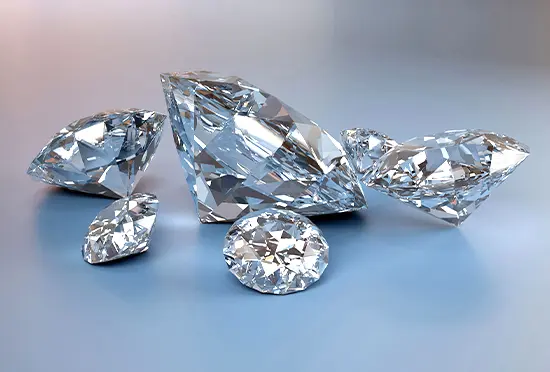
In an age where environmental awareness collides with familial tradition, families are wrestling with a unique ethical dilemma: what do I do with the jewelry of my grandparents that carries both emotional weight and its own environmental impact? This question illuminates a tangled skein of values, guilt, responsibility and evolving definitions of what it means to honor the past while safeguarding the future.
The Environmental Price of Keeping vs. Selling
Orthodox wisdom has it that holding onto inherited jewelry honors our ancestors and keeps alive the family’s narrative. But environmental ethicists are questioning that assumption, looking more comprehensively at the impact of jewelry ownership throughout its entire lifecycle. To store it away in a safe deposit box or vault for decades, never to be worn and never to circulate, is what economists call “dead capital.” Environmentalists see something worse: carbon locked.
From its extraction, processing and manufacture, every item of jewelry carries an embodied carbon footprint. When the jewelry is sitting there unused, however, that environmental cost becomes a sunk impact with no value to offset it. On the other hand, when inherited diamonds are pushed back into circulation by specialists such as Bkk Diamond, they fill an important environmental role: meeting demand without the need for new mines.
The Circular Economy Argument
On a practical level, the strongest environmental argument for selling inherited jewelry is based on the principles of the circular economy. The new diamond and gold mines are some of the most carbon-intensive businesses in existence. One gold ring comes at the colossal cost of shifting around 20 tons of earth, drinking up gargantuan volumes of water and energy while emitting extensive carbon and damaging landscapes.
The economy of jewelry also means that when someone buys previously mined (like, decades or centuries old mining) pieces instead of newly extracted material, they are directly stopping new extraction. This “displacement effect” implies that any handed-down ring, bracelet or necklace that is bought second-hand saves the equivalent amount of mining. From this point of view, unloading inherited jewelry is not a betrayal of sentimentality but an environmental obligation.
But that argument presumes that secondhand jewelry takes the place of new purchases rather than just adding to overall consumption — a point environmental economists argue about vigorously.
Sentimental Value as Cultural Carbon
The counter-argument posits the logical notion of “cultural carbon”—the ephemeral, even spectral value in not losing contact with the past. Heirloom jewelry such as these provide tangible links to ancestors, bearing stories and emotional weight that simply cannot be copied. As we destroy these chains of inheritance, carbon-free sources of meaning and identity that could substitute for more consumption cease to be available.
From this point of view, the environmental impact of retaining inherited jewelry could be balanced by its contribution to people’s nonmaterial forms of satisfaction and identity. And with a grandmother’s ring, worn every day of the year someone receives it, joy and connectedness are produced without needing additional resources — which may prevent future jewelry from new materials being bought at all.
The Guilt Matrix
For a lot of families, the choice to sell inherited jewelry is a source of profound guilt working on more than one level. Then there’s that typical guilt of feeling as though the ancestors are being dishonored by trading off their gifts for cash. There’s another, more recent kind of environmental guilt layered over that: the knowledge that to hold on to these pieces might be a selfish display of sentimentality in the face of climate crisis.
This double bind engenders what psychologists refer to as “moral injury” — the feeling that one is simply forced to do something wrong, rather than choosing between moral and immoral action. The resonance is especially deep for the millennial and Gen Z inheritors who have grown up with environmental mindfulness but also seek what feels like an authentic connection to their heritage in an increasingly digital, rootless world.
The Wearing vs. Storing Distinction
There is a key ethical difference between jewelry that’s being worn, and what sits with sentimental value collecting dust. And from environmental (as well as sentimental) view, jewelry that is worn and enjoys the appreciation which regular use confers deserves to remain in the family. The gain is emotional, and the embodied carbon pays forward.
Jewelry that sits unworn for years or decades doesn’t pass either test. It doesn’t make you feel happy (emotions exist only in actual or contemplated use) and an embodied environmental cost without any offsetting value. Advisers at Bkk Diamond frequently advise families that selling unworn inherited pieces to a buyer who will appreciate and wear them not only acts on environmental ethics, but also respects the original owner’s intent that jewelry make people feel good.
The Geographic Ethics Problem
Heirloom jewelry, in particular, can spawn a thicket of difficult questions about historical complicity when it comes to environmental and human rights abuses. Diamonds and gold mined decades or centuries ago were often extracted through means that today we would find unconscionable — be it the colonial mining integrated with forced labor or environmentally harmful ore-processing techniques now outlawed in many jurisdictions.
Are we complicit in historical wrongs if we keep such jewelry? Or does selling it simply transfer that complicity to someone else and also obliterate the historical memory of how those pieces originated in the first place? Environmental ethicists are split, but many believe recognition of that less-than-uplifting history — while also ensuring the pieces work to maximum current potential — is the most ethical approach today.
The Transformation Option
Some families resolve the ethical tension in transformation — working with jewelers to revamp inherited pieces into new styles. This method keeps the actual materials themselves in existence (thus not needing to be newly mined) and leaves us with jewelry that’s a better fit for the modern palate — plus, it will actually be worn.
But each transformation also has its own environmental cost in terms of the energy used to melt, refine and otherwise shape. For some families, the environmental math is still strong in favor of selling intact pieces to established dealers like Bkk Diamond where the jewelry can be put to use without further processing.
Intergenerational Justice Considerations
The ethics of hand-me-down jewelry have to do with questions of intergenerational justice too. In a world where future generations will inherit a ruined planet, do we have any right to keep jewelry simply for sentiment? Or, are we in some ways obligated to preserve cultural forms and have physical anchoring in history that the next generations may badly need for any sense of self or purpose?
There are no easy answers to these questions, but they illustrate how personal choices about inherited jewelry resonate with larger philosophical discussions about our responsibilities to the past and future of humanity.
Calculating True Environmental Impact
Recent life-cycle analyses indicate that the environmental cost of owning and wearing jewelry involves a few critical details, things you might not have thought of:
Insurance and security: Climate-controlled vaults and alarm systems use energy round the clock. An artwork stored professionally for 30 years may create a huge amount of carbon because of the infrastructure needed to maintain it.
Transportation: There are transportation emissions associated with transporting jewelry between generations, to appraisers and in and out of storage, says Gregory C. Unruh, the Arison Group Endowed Professor at George Washington University’s School of Business who has written about sustainable businesses.
Opportunity cost: The amount of capital tied up in unused jewelry may be used to support environmental projects or renewables investments, displacing the (environmentally positive) impact on climate of that lost embodied carbon.
The Personal vs. Planetary Scale
Once you start down this ethics hole, it’s tough to climb out. Against the backdrop of global environmental catastrophe, one family’s decision about what to do with inherited jewelry should feel infinitesimally small. But in the aggregate, collective individual choices — millions of families doing what this one family is doing — have a big effect.
This scalar indiscernibility is psychologically troubling, as it prevents us from balancing emotional value with environmental responsibility. What is the value of a grandmother’s wedding ring, in tons of CO2 equivalent? The question is ridiculous and yet unavoidable.
Toward Ethical Clarity
Though there may be no definitive right answer, families stand to gain ethical clarity through candid reflection on a number of critical questions:
Will the trinkets be worn and cherished? If it’s not, its value to you is simply sentimental and thus only potential.
Too attached: Does holding onto this piece disallow potential future jewelry buys? And if an individual retains an inherited brooch but also continues to buy new jewelry, the environmental argument for keeping it crumbles.
Can any capital generated through the sale of [this] be used to support environmentally beneficial purposes? Some families are solving the conundrum by selling inherited jewellery and donating the proceeds to conservation or climate funds.
Conclusion: Embracing Complexity
The ethics of selling inherited jewelry don’t easily conjure straightforward answers because they involve what are, in fact, true value conflicts — not battles of good vs. bad, but rather goods competing with one another. Sentimental attachment with family past is genuinely precious. Environmental responsibility is equally important. They often coincide but can pull in opposite directions.
What truly matters is that you approach the decision on each of these dimensions being conscious and fully aware of what you are giving up or trading off, so that when you do make a choice it is rooted in your belief about things as opposed to they way things “should” be according to tradition or social pressure. Whether you decide to keep, sell, or repurpose inherited jewelry in the end is a decision of true value: One that turns your act from an ethical failing into something that reflects examined values — perhaps the best anyone can muster when confronted with legitimately thorny ethical challenges.